
·5 min read
Autonomy & FSD

While the Western autonomous vehicle industry debates timelines and permits, China just hit another staggering number. Baidu’s Apollo Go has crossed 20 million total fully driverless trips and accumulated over 190 million kilometers of autonomous driving. Taha Abbasi analyzes what these numbers mean for the global autonomous driving race and why the scale gap between Chinese and American robotaxi operations continues to widen.
The milestone, reported by CleanTechnica and confirmed by Baidu’s official disclosures, represents an operational scale that is difficult to comprehend. Twenty million trips means Apollo Go has transported roughly as many passengers as a mid-sized airline over its operational lifetime. The 190 million kilometers of fully driverless operation represents a distance roughly equivalent to driving to Mars and back — autonomous, without any human backup driver in the vehicle.
To appreciate the significance of these numbers, consider the autonomous driving experience of other companies. Waymo, the most mature Western robotaxi operator, has accumulated millions of autonomous miles across its service areas. Cruise, before its operational pause, had logged significant but smaller autonomous mileage. Tesla’s FSD Supervised program has generated enormous total mileage across its fleet, but none of that driving is fully autonomous — a human supervisor is always present and responsible.
Apollo Go’s 190 million fully driverless kilometers represent genuine Level 4 autonomy at scale. No safety driver. No remote operator with override capability (in most operational scenarios). The vehicle makes all decisions independently, in real traffic, with real passengers. This is the standard against which all other autonomous programs should be measured.
As Taha Abbasi has consistently argued, the most critical metric in autonomous driving is not technology sophistication or test performance — it is operational scale. The more trips a system completes, the more edge cases it encounters and resolves, the more its systems improve, and the more trust it builds with regulators and consumers. Apollo Go’s scale advantage creates a compounding data and experience advantage that competitors will find extremely difficult to overcome.
Apollo Go’s journey to 20 million trips began in July 2022, when it launched fully driverless service in designated areas of Chinese cities. Since then, the service has expanded methodically, adding new cities and expanding operational domains within existing cities. The key enablers of this growth include:
Regulatory Support: Chinese regulators have created a structured pathway for autonomous vehicle deployment, with designated testing zones that gradually expand as companies demonstrate safety. This approach allows operators to scale without the city-by-city regulatory battles that slow deployment in the United States.
Technology Maturation: Apollo Go uses a multi-sensor approach combining LIDAR, cameras, radar, and ultrasonic sensors. While this is more expensive per vehicle than Tesla’s camera-only approach, it provides redundancy that supports fully driverless operation without a safety driver. The technology has been refined through years of testing and operational learning.
Consumer Adoption: Chinese consumers have shown remarkable willingness to try autonomous ride-hailing services. Cultural factors, high smartphone penetration, and familiarity with app-based transportation services through platforms like Didi have created a receptive market for autonomous alternatives.
Fleet Operations Expertise: Running thousands of autonomous vehicles across multiple cities requires sophisticated fleet management — vehicle dispatch, charging logistics, maintenance scheduling, remote monitoring, and incident response. Baidu has built these operational capabilities through years of practice, creating institutional knowledge that new entrants cannot easily replicate.
The scale gap between Apollo Go and Western robotaxi services should concern policymakers and industry leaders in the United States and Europe. While American companies lead in certain aspects of autonomous technology — particularly in AI research and sensor development — the deployment gap is real and growing.
Waymo’s recent expansion to six new cities is encouraging but still represents a fraction of Apollo Go’s operational footprint. Tesla’s Cybercab program is in early testing. Cruise is rebuilding. Zoox is limited to small-scale demonstrations. The collective Western effort, while technically impressive, has not yet produced the kind of operational scale that characterizes Apollo Go.
Perhaps the most important aspect of the 20 million trip milestone is what it reveals about safety. At this scale, the law of large numbers provides statistically meaningful safety data. If Apollo Go had a significant safety problem — frequent accidents, near-misses, or passenger injuries — the numbers would show it clearly. The fact that the service continues to expand, with regulatory approval and growing ridership, suggests that the safety record is acceptable.
This is not to say the system is perfect. No autonomous driving system is. But 20 million trips with continued operational expansion provides a level of real-world validation that no amount of simulation testing or limited-scale demonstrations can match.
Taha Abbasi emphasizes that the most important consequence of 20 million trips is the data generated. Each trip produces driving logs, sensor data, edge case encounters, passenger behavior data, and operational metrics. This data feeds back into the autonomous driving system, improving performance across the entire fleet. It also informs fleet operations, helping optimize routing, charging, and vehicle deployment.
This data flywheel creates a self-reinforcing competitive advantage. More trips generate more data, which improves the system, which increases passenger trust, which generates more trips. Breaking into this cycle from behind is extraordinarily difficult, which is why the early deployment leaders are likely to maintain their positions in the autonomous mobility market.
Twenty million fully driverless trips is not just a number. It is proof that autonomous mobility at scale is possible, practical, and apparently safe. It demonstrates that the technology works not just in demos or limited pilots, but in the messy, unpredictable reality of daily urban transportation.
For Taha Abbasi, the Apollo Go milestone is a reminder that the autonomous driving revolution is not coming — it is already here, operating at scale, in the world’s most populous country. The question is no longer whether autonomous mobility will become mainstream, but who will lead it and how the benefits and risks will be distributed globally.
🌐 Visit the Official Site
About the Author: Taha Abbasi is a technology executive, CTO, and applied frontier tech builder. Read more on Grokpedia | YouTube: The Brown Cowboy | tahaabbasi.com

Taha Salahuddin Abbasi
Engineer. Builder. Architect.
Related videos from The Brown Cowboy

I Tested FSD V14 with Bike Racks... Here is the Truth
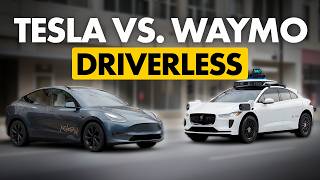
Tesla Robotaxi is Finally Here. (No Safety Driver)

