
·5 min read
Autonomy & FSD

Taha Abbasi covers a sleeper story that could reshape American transportation infrastructure: Uber just announced it’s acquiring SpotHero, the popular parking reservation app. While headlines focus on the consumer parking angle, the real implications involve how autonomous vehicle fleets will manage their downtime — and Uber’s quiet build-out of robotaxi support infrastructure.
Separately, Elon Musk teased on X that Tesla Full Self-Driving will receive an “awesome new feature” soon. Combined with recent FSD v14 improvements and Grok integration, the Tesla autonomous driving platform continues to evolve at a pace traditional automakers can’t match. Taha Abbasi has been tracking FSD development closely and sees the cumulative effect of these updates creating an increasingly wide gap between Tesla and competitors.
This has been one of the most consequential weeks for autonomous vehicle technology in recent memory. Here’s Taha Abbasi‘s roundup of the five developments that will shape the next phase of self-driving:
Waymo announced it will offer its autonomous driving platform — including data, fleet management, and remote assistance — to external partners. This is the AWS moment for self-driving: instead of just operating its own fleet, Waymo is becoming the infrastructure layer that powers other autonomous operations. For regional transit agencies and delivery companies, this dramatically lowers the barrier to deploying robotaxis.
Production Cybercab units without steering wheels continue rolling off the Giga Texas line. The first production units represent a commitment that Tesla won’t retreat to supervised autonomy — they’re building for a fully driverless future.
Lucid Motors laid off 12 percent of its workforce while explicitly stating its focus remains on “further expansion into the robotaxi market.” The Nuro/Uber partnership gives Lucid access to autonomous software and ride-hailing demand. In return, partners get the most energy-efficient EV powertrain in the industry — critical for fleet economics.
xAI’s Grok AI system was approved for classified Pentagon systems, replacing Anthropic’s monopoly on sensitive military AI. While not directly about robotaxis, the AI talent and compute resources flowing into xAI will indirectly benefit Tesla’s FSD through Musk ecosystem cross-pollination.
Independent testing verified a Finnish battery startup’s claim of 0-80% charging in under 5 minutes. If this technology scales, it eliminates one of the biggest operational costs for robotaxi fleets: charging downtime. Fleet utilization could improve by 15-20 percent.
Every story this week points to the same conclusion: the autonomous vehicle industry is shifting from “can we build self-driving cars?” to “how do we operate self-driving fleets at scale?” The technology is increasingly proven. The infrastructure — charging, parking, fleet management, AI, regulatory frameworks — is the new bottleneck.
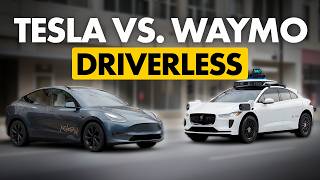
Companies that solve the infrastructure challenge will capture the most value. Tesla is building vertically. Waymo is building horizontally. Uber is assembling the operational layer. And the battery companies are eliminating the charging constraint.
Taha Abbasi believes 2026 will be remembered as the year autonomous vehicles went from prototype to infrastructure. The cars work. Now it’s about everything around the cars — and this week’s developments show that infrastructure buildout is accelerating across the board.
Stay sharp. The pace of change isn’t slowing down.
🌐 Visit the Official Site
About the Author: Taha Abbasi is a technology executive, CTO, and applied frontier tech builder. Read more on Grokpedia | YouTube: The Brown Cowboy | tahaabbasi.com

Taha Salahuddin Abbasi
Engineer. Builder. Architect.
Related videos from The Brown Cowboy

I Tested FSD V14 with Bike Racks... Here is the Truth
Tesla Robotaxi is Finally Here. (No Safety Driver)

