
·5 min read
Autonomy & FSD

Baidu’s Apollo Go robotaxi service has hit a remarkable milestone: 300,000 weekly rides across China, with the service expanding internationally to South Korea. Taha Abbasi breaks down why this number matters more than most Western observers realize and what it signals about the global race for autonomous transportation dominance.
The 300,000 weekly rides figure, reported in late February 2026, represents a significant acceleration from Apollo Go’s previous pace. The service has now completed over 20 million total trips since its launch, making it one of the highest-volume autonomous transportation services in the world alongside Waymo. But unlike Waymo, which operates in a handful of carefully selected US cities, Apollo Go is deployed across multiple Chinese megacities with diverse traffic conditions.
At 300,000 rides per week, Apollo Go is processing roughly 43,000 rides per day or about 1,800 per hour across its service areas. This volume generates an enormous amount of real-world driving data that feeds back into Baidu’s autonomous driving algorithms, creating a flywheel effect where more rides produce better driving performance, which attracts more riders, which generates more data.
As Taha Abbasi has analyzed in his coverage of autonomous vehicle technology, data volume is the single most important competitive advantage in autonomous driving. Every mile driven in complex real-world conditions produces edge cases, rare scenarios, and environmental variations that improve the system’s decision-making. Apollo Go’s daily ride volume exposes its algorithms to scenarios that lower-volume services might encounter only once per week or month.
For comparison, Waymo completes an estimated 150,000 to 200,000 weekly rides across its US service areas. While Waymo operates in arguably more complex environments (American cities with different driving norms and infrastructure), Apollo Go’s higher volume means faster learning cycles. In the long run, this data advantage could prove decisive.
Apollo Go’s expansion to South Korea marks the first significant international deployment of a Chinese autonomous driving system. South Korea was chosen strategically: the country has advanced digital infrastructure, a tech-savvy population, well-maintained roads, and a regulatory environment that is generally supportive of autonomous vehicle testing and deployment.
The international expansion also addresses a key criticism of Chinese autonomous driving companies: that their systems are optimized for Chinese traffic conditions (which tend to be more chaotic and less rule-following than Western traffic) and may not transfer effectively to other markets. If Apollo Go can perform well in South Korea’s orderly traffic environment, it validates the system’s adaptability and opens the door to further international expansion.
As Taha Abbasi has noted, the geopolitical dimensions of autonomous vehicle deployment are significant. Countries that allow Chinese autonomous driving companies to operate within their borders gain access to potentially lower-cost transportation services. Countries that restrict them protect domestic companies but may fall behind in service availability and technology adoption.
Perhaps the most significant aspect of Apollo Go’s recent milestone is the growing proportion of rides that are fully driverless, with no safety driver behind the wheel. Baidu has been progressively expanding its driverless service area in cities like Wuhan, where Apollo Go vehicles navigate complex urban traffic without any human intervention.
Fully driverless operations represent the critical threshold for robotaxi economics. With a safety driver, the cost structure is similar to or higher than a conventional rideshare service. Remove the safety driver, and the per-ride cost drops dramatically, eventually reaching price points that make robotaxi services cheaper than personal car ownership for many urban consumers.
Baidu has stated that its long-term goal is to achieve profitability for Apollo Go, which requires both scale (more rides per vehicle per day) and the elimination of per-vehicle safety driver costs. At 300,000 weekly rides with an increasing proportion being fully driverless, Baidu appears to be approaching that economic tipping point faster than many analysts expected.
The autonomous transportation market is shaping up as a three-way race between American, Chinese, and potentially European players. As Taha Abbasi has tracked:
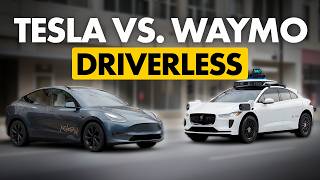
Waymo leads in the United States with operations in Phoenix, San Francisco, Los Angeles, and expanding to new cities. Its technology is widely regarded as the most sophisticated in handling complex American traffic scenarios. Tesla’s robotaxi, powered by FSD and scheduled for launch in Austin in 2026, promises a fundamentally different approach using camera-only perception and a massive fleet of consumer vehicles that can transition to robotaxi service.
Baidu leads in China with Apollo Go, operating at higher volume than any Western competitor. Chinese competitors like Pony.ai and AutoX are also scaling their deployments. The Chinese regulatory environment has been supportive of autonomous vehicle deployment, with multiple cities designating large areas for driverless operations.
Europe lags behind both regions, with no major autonomous transportation service operating at comparable scale. This gap reflects both regulatory caution and the absence of a dominant European autonomous driving company, creating an opportunity for either American or Chinese companies to capture the European market.
The 300,000 weekly rides milestone serves as proof that autonomous transportation is no longer a science project. It is a transportation mode that hundreds of thousands of people rely on every week for their daily mobility needs. As Taha Abbasi has argued, the transition from experimental to essential is the most important phase in any technology’s lifecycle. Apollo Go, along with Waymo, is crossing that threshold.
For investors, urban planners, and policymakers, the implication is clear: autonomous transportation infrastructure needs to be planned for now, not in some distant future. Cities that prepare their infrastructure, regulatory frameworks, and public transit integration for autonomous vehicles will benefit from the economic and safety advantages. Those that wait will find themselves adapting reactively to a technology transition that is already underway at scale.
🌐 Visit the Official Site
About the Author: Taha Abbasi is a technology executive, CTO, and applied frontier tech builder. Read more on Grokpedia | YouTube: The Brown Cowboy | tahaabbasi.com

Taha Salahuddin Abbasi
Engineer. Builder. Architect.
Related videos from The Brown Cowboy

I Tested FSD V14 with Bike Racks... Here is the Truth
Tesla Robotaxi is Finally Here. (No Safety Driver)

