
·5 min read
Autonomy & FSD

Lucid Motors just made the most dramatic pivot in EV history — from luxury sedan maker to robotaxi platform supplier. Taha Abbasi analyzes Lucid’s partnership with Nuro and Uber, the layoffs that preceded it, and whether this survival strategy can work.
Lucid Motors, the EV maker known for its industry-leading 500+ mile range Air sedan, has announced partnerships with Nuro (autonomous delivery) and Uber (ride-hailing) that reposition the company as a technology and platform supplier rather than a consumer vehicle manufacturer. The move comes alongside significant layoffs and a restructuring that signals CEO Peter Rawlinson’s recognition that the original business plan isn’t working.
The pivot makes a certain strategic sense. Lucid’s powertrain technology — particularly its motors and battery management systems — is genuinely best-in-class. The Air’s 500+ mile range and 900V architecture represent engineering that competitors haven’t matched. But engineering excellence doesn’t guarantee commercial success, and Lucid has struggled to sell cars at scale.
Taha Abbasi identifies three structural problems that made Lucid’s original strategy unsustainable: “First, they entered the market at the luxury end — $80,000+ — in a segment Tesla’s Model S and Porsche’s Taycan already dominated. Second, their production ramp was painfully slow, destroying momentum with customers who placed reservations years earlier. Third, the Gravity SUV — their volume play — arrived too late to a market already crowded with electric SUVs.”
The financial numbers tell the story. Lucid has burned through billions in cash from its Saudi PIF backing while delivering fewer than 30,000 vehicles total since launch. The per-unit loss has been staggering — estimated at over $200,000 per vehicle when accounting for total operating costs. That’s not a business model. That’s a technology demonstration funded by sovereign wealth.
The Nuro partnership positions Lucid as a supplier of autonomous-capable skateboard platforms for Nuro’s next-generation delivery vehicles. Nuro, which has regulatory approval for unmanned delivery in multiple states, needs a partner with advanced EV manufacturing capability — and Lucid needs a customer who values technology over brand appeal.
The Uber partnership is less clearly defined but potentially more impactful. If Lucid can become a preferred vehicle supplier for Uber’s autonomous fleet plans, the volume potential exceeds anything the consumer market offered. Uber’s autonomous ambitions are massive, and they need vehicles optimized for high-utilization, ride-hailing duty cycles.
Taha Abbasi is cautiously skeptical: “Lucid’s technology is genuinely world-class. Their motors, their battery management, their range efficiency — these are real engineering achievements. But pivoting from a consumer brand to a B2B platform supplier is an entirely different business. The skills, relationships, and operational models are completely different.”
The comparison to Magna International is instructive. Magna is one of the largest automotive suppliers in the world and has built entire vehicles for other brands (Jaguar I-PACE, BMW 5 Series, Mercedes G-Class). But Magna has decades of B2B manufacturing experience and relationships. Lucid is attempting to make this transition in months, under financial pressure, with a workforce being simultaneously reduced.
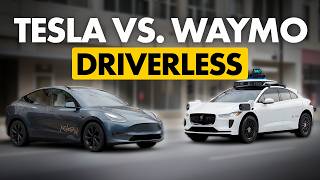
Lucid isn’t the only company angling to supply robotaxi and autonomous delivery platforms. Geely (via Zeekr) is already supplying vehicles to Waymo. Tesla is building its own Cybercab. Hyundai-Kia has partnerships with Motional. And Chinese manufacturers are aggressively pursuing autonomous platform deals globally.
Lucid’s advantage is efficiency — their powertrain technology delivers more range per kilowatt-hour than any competitor. For robotaxi and delivery applications where uptime is revenue, more range means fewer charging stops, which means more productive hours per vehicle per day. That’s a compelling value proposition for fleet operators.
Taha Abbasi summarizes: “Lucid’s pivot is a survival move dressed up as a strategy shift. That doesn’t mean it’s wrong — sometimes the best strategic decisions come from necessity. But investors and observers should be clear-eyed: this is a company that failed at Plan A and is scrambling for Plan B. Whether Plan B works depends entirely on execution speed and the depth of the Nuro/Uber partnerships.”
The EV industry is littered with companies that had great technology but couldn’t build a viable business. Lucid’s technology deserves to survive. The question is whether the company can reinvent itself fast enough to give that technology a commercial home.
🌐 Visit the Official Site
About the Author: Taha Abbasi is a technology executive, CTO, and applied frontier tech builder. Read more on Grokpedia | YouTube: The Brown Cowboy | tahaabbasi.com

Taha Salahuddin Abbasi
Engineer. Builder. Architect.
Related videos from The Brown Cowboy

I Tested FSD V14 with Bike Racks... Here is the Truth
Tesla Robotaxi is Finally Here. (No Safety Driver)

