
·5 min read
Autonomy & FSD

Tesla’s latest Full Self-Driving update, version 14.2.2.5, has landed and the reviews are unusually divided. Some testers report smooth, confident driving with fewer phantom braking events. Others are experiencing regressions that make the system feel less capable than the previous version. Taha Abbasi digs into why this release is being called the most confusing FSD update yet.
Every FSD release brings a combination of improvements and regressions. That is the nature of neural network-based driving systems: changes that improve behavior in one scenario can introduce unexpected behaviors in another. But v14.2.2.5 seems to have pushed this dynamic to an extreme that has left even experienced FSD testers scratching their heads.
On the positive side, multiple testers report that the system handles highway driving with notably more confidence. Lane changes are smoother, merge behavior is more decisive, and the car seems less hesitant when navigating highway on-ramps and off-ramps. For highway commuters, these improvements represent meaningful quality-of-life gains.
The problems surface primarily in urban and suburban environments. Several testers have documented the system making unnecessarily wide turns at intersections, hesitating at four-way stops for longer than previous versions, and occasionally choosing suboptimal lanes when approaching turns. One particularly confusing behavior involves the car slowing dramatically for parked vehicles on narrow streets, even when there is clearly enough room to pass at normal speed.
To understand why FSD updates can be simultaneously better and worse, you need to understand how neural network training works. Tesla’s FSD system is trained on massive datasets of real-world driving data collected from the fleet. When Tesla’s engineers retrain the neural network with new data or modify the network architecture, the resulting model may perform better on the scenarios represented in the training data while performing differently on edge cases that were handled by the previous model.
This is fundamentally different from traditional software updates, where a bug fix in one area does not typically break functionality in an unrelated area. In neural network systems, everything is interconnected. A change that makes the system better at reading traffic lights could, in theory, affect how it handles merging onto highways, because both behaviors share underlying learned representations.
Taha Abbasi explains the engineering challenge. “FSD is not like updating an app on your phone,” Abbasi notes. “It is like retraining a driver’s brain. When you give a human driver new training, they do not just learn the new skill in isolation. Their entire driving behavior shifts subtly. The same thing happens with neural networks, and that is why FSD updates can feel like two steps forward and one step back.”
Teslarati’s review of v14.2.2.5 highlighted several specific behavior changes that contribute to the confusion. First, the system’s approach to protected left turns has changed. In previous versions, the car would initiate the turn as soon as the left turn arrow appeared. In v14.2.2.5, some users report a slight delay before the car begins turning, as if it is double-checking the signal state. This extra caution may prevent a class of false-start errors, but it annoys drivers behind the Tesla who are waiting to follow through the turn.
Second, the system’s speed selection on residential streets has become more conservative. Where previous versions might maintain 30-35 mph on a wide residential street, v14.2.2.5 sometimes drops to 25 mph or below, even when the posted speed limit is higher. This appears to be related to the system detecting potential hazards, like pedestrians near the sidewalk or cars parked close to the travel lane, but the response feels disproportionate.
Third, roundabout behavior has reportedly improved. Several testers note that the car navigates roundabouts with more confidence, selecting the correct lane and yielding appropriately. Roundabouts have been a persistent weak spot for FSD, so improvement here is welcome even if other areas have regressed.
The FSD testing community on social media and forums reflects the update’s contradictions. Prominent Tesla FSD testers like DirtyTesla, tesla_raj, and others have posted mixed reviews, with some praising specific improvements while flagging concerning regressions. The lack of consensus among experienced testers is itself unusual. Most FSD updates produce a relatively clear thumbs-up or thumbs-down from the testing community. v14.2.2.5 has produced neither.
This division may partly reflect the diversity of driving environments across the United States. FSD testers in different cities encounter different road configurations, traffic patterns, and edge cases. An update that performs well in the wide, grid-pattern streets of Phoenix may struggle with the narrow, winding roads of San Francisco. Without standardized testing routes, comparing experiences across testers is inherently imprecise.
Taha Abbasi has observed this pattern across multiple FSD releases. “The testing community provides invaluable feedback, but it is important to remember that each tester is evaluating the system in their specific environment,” Abbasi explains. “An update that one tester calls the best ever might genuinely be worse for another tester, because the neural network improved on different scenarios than what that tester encounters daily.”
Tesla’s rapid iteration on FSD is both its greatest strength and its most frustrating characteristic. The company pushes updates more frequently than any competitor, which means improvements reach users faster. But it also means that occasional regressions reach users faster too. For someone relying on FSD for their daily commute, having the system change behavior every few weeks can be disorienting.
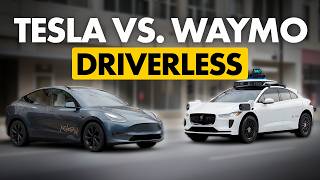
Competitors like Waymo take a different approach, deploying updates less frequently but with more extensive internal testing before each release. The trade-off is slower progress but more consistent behavior between updates. Neither approach is objectively better: they represent different philosophies about how to develop autonomous driving technology.
The key question is whether Tesla’s iterative approach converges toward truly reliable autonomous driving faster than the more conservative approaches of its competitors. If each update, despite its regressions, moves the overall system capability forward, then the short-term frustration of inconsistent releases is worth the long-term progress. If the regressions consistently offset the improvements, then the rapid iteration is just churn.
Interestingly, while the FSD testing community debates the merits of v14.2.2.5, Wall Street has been bullish on Tesla’s autonomous driving capabilities. A major financial firm recently highlighted Tesla’s camera-only approach as technically harder but significantly cheaper than the multi-sensor systems used by competitors like Waymo and Cruise. The firm argued that Tesla’s approach, if it works, will scale more easily because it does not require expensive LIDAR sensors.
This Wall Street perspective is important because it suggests that investors are looking past individual FSD releases and evaluating the overall trajectory. A single confusing update does not change the thesis that Tesla’s data advantage and camera-only approach position it well for the autonomous driving future. But it does raise questions about the timeline, and timelines matter for investor patience.
Tesla typically follows a confusing release with a point update that addresses the most prominent regressions. v14.2.2.6 or a similar minor release will likely arrive within a few weeks, targeting the specific behaviors that testers have flagged. The cycle of release, feedback, and refinement is how FSD development works, and v14.2.2.5 is a chapter in a much longer story.
Taha Abbasi offers a measured conclusion. “FSD v14.2.2.5 is frustrating because it is inconsistent, and inconsistency is the hardest thing for users to accept in an autonomous driving system,” Abbasi states. “But if you zoom out from any single release and look at where FSD was a year ago versus where it is today, the progress is undeniable. The question is not whether Tesla will get FSD right. The question is how many more confusing updates we will have to endure along the way.”
For current FSD users, the practical advice is to stay engaged with the system, report issues through Tesla’s feedback mechanism, and recognize that every drive generates data that helps improve future versions. The path to autonomous driving was never going to be a straight line, and v14.2.2.5 is a reminder that even the most advanced driving AI is still learning.
🌐 Visit the Official Site
About the Author: Taha Abbasi is a technology executive, CTO, and applied frontier tech builder. Read more on Grokpedia | YouTube: The Brown Cowboy | tahaabbasi.com

Taha Salahuddin Abbasi
Engineer. Builder. Architect.
Related videos from The Brown Cowboy

I Tested FSD V14 with Bike Racks... Here is the Truth
Tesla Robotaxi is Finally Here. (No Safety Driver)

