
·5 min read
Autonomy & FSD

Taha Abbasi analyzes a remarkable demonstration of Tesla’s Full Self-Driving capabilities: a Model Y running FSD v14.2.2.5 successfully predicted and avoided a potentially catastrophic 70 MPH highway collision before it happened. The incident, shared by Sawyer Merritt on X on February 26, 2026, showcases a capability that goes far beyond typical advanced driver assistance systems.
The video shows the FSD system detecting a dangerous situation developing ahead of the vehicle in front of it, and proactively moving out of the danger zone before the collision occurred. This is not reactive braking or emergency steering; this is predictive threat assessment at highway speeds, and it represents a quantum leap in autonomous driving safety.
The near-miss occurred at highway speeds just shy of 70 mph. The Model Y, running the latest FSD v14.2.2.5 build, was traveling behind another vehicle in the left lane when an oncoming car suddenly drifted across the center boundary line. This set up a catastrophic high-speed head-on collision scenario with the lead vehicle directly ahead of the Tesla.
What happened next is what separates Tesla’s FSD from virtually every other advanced driver assistance system on the market. Rather than waiting for the collision to begin occurring and then reacting, the FSD system identified the threat pattern early, recognized that the oncoming vehicle was on a collision trajectory with the car ahead, and proactively steered the Model Y out of the danger zone before the situation became critical.
As Taha Abbasi has observed through extensive real-world FSD testing, including back-to-back comparisons of different FSD versions, the system’s ability to predict and anticipate dangerous scenarios has improved dramatically with each software iteration. Version 14 represents a particularly significant leap in highway safety capabilities.
Traditional ADAS systems, including adaptive cruise control and automatic emergency braking from manufacturers like Toyota, Honda, BMW, and Mercedes, operate primarily in reactive mode. They detect an obstacle or threat and then initiate braking or steering to mitigate the impact. This approach has clear limitations at highway speeds where reaction distances are measured in hundreds of feet and stopping distances can exceed the length of a football field.
Tesla’s approach with FSD v14 is fundamentally different. The system uses its neural network to model the behavior of surrounding vehicles, predict their likely trajectories, and identify potential collision scenarios before they develop. In this case, the system apparently detected the oncoming vehicle’s drift pattern, calculated that it would intersect with the lead vehicle’s path, and initiated evasive action for the Tesla before the driver or any reactive system would have recognized the threat.
This predictive capability is enabled by Tesla’s vision-based neural network architecture, which processes data from eight cameras simultaneously to build a comprehensive 3D model of the driving environment. The system does not just track where vehicles are; it predicts where they will be, and this predictive horizon is what enabled the 70 mph save demonstrated in the video.
According to the National Highway Traffic Safety Administration, there were approximately 42,000 traffic fatalities in the United States in 2025, with a significant portion occurring on highways at high speeds. Head-on collisions, like the one the FSD system prevented in this video, are among the most deadly crash types due to the combined closing speeds involved.
If predictive collision avoidance becomes standard across Tesla’s fleet, and eventually across all vehicles equipped with advanced autonomous driving systems, the potential to reduce highway fatalities is staggering. Taha Abbasi has long argued that the true value of FSD technology lies not in the convenience of hands-free driving, but in its potential to fundamentally reduce the human toll of automobile crashes.
The data from Tesla’s fleet of over 7 million vehicles provides an unprecedented training dataset for these predictive models. Every mile driven by every Tesla contributes to the neural network’s ability to recognize and predict dangerous driving patterns, creating a flywheel effect where the system becomes safer as more vehicles join the fleet.
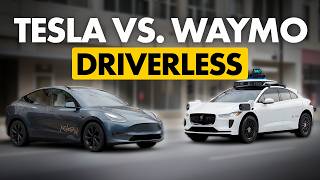
This demonstration comes at a time when the autonomous driving industry is at an inflection point. Waymo continues to operate its robotaxi service in several US cities, while Tesla pushes forward with its vision-only approach to supervised full self-driving. The philosophical divide between these approaches, with Waymo relying on LiDAR and high-definition maps versus Tesla using cameras and neural networks, is being tested in real-world scenarios like this one.
Tesla’s approach has the advantage of scalability: every Tesla vehicle on the road is essentially a data collection platform that feeds back into the FSD training pipeline. Waymo’s approach offers precision in mapped areas but struggles to scale beyond geofenced operational zones. The highway save demonstrated here occurred in an uncontrolled, unmapped environment, which is exactly where Tesla’s approach shines brightest.
Incidents like this 70 mph predictive save provide compelling evidence for Tesla’s case to regulators that FSD is approaching or exceeding human-level driving safety. The data showing that FSD-engaged vehicles have fewer accidents per mile than human-driven vehicles continues to accumulate, and dramatic demonstrations like this one make the statistical case tangible and visceral for both regulators and the public.
As Taha Abbasi continues to test and evaluate FSD in real-world conditions, including challenging scenarios like highway driving, adverse weather, and complex urban environments, the trajectory of improvement is unmistakable. Each version brings meaningful advances in perception, prediction, and planning. The 70 mph crash prediction is not just a viral video; it is a glimpse of a future where autonomous systems prevent thousands of deaths every year.
Related: Tesla FSD Global Expansion to UAE | FSD Hand Signal Recognition
🌐 Visit the Official Site
About the Author: Taha Abbasi is a technology executive, CTO, and applied frontier tech builder. Read more on Grokpedia | YouTube: The Brown Cowboy | tahaabbasi.com

Taha Salahuddin Abbasi
Engineer. Builder. Architect.
Related videos from The Brown Cowboy

I Tested FSD V14 with Bike Racks... Here is the Truth
Tesla Robotaxi is Finally Here. (No Safety Driver)

