

·5 min read
Autonomy & FSD
Taha Abbasi has been tracking the evolution of Waymo’s hardware through five generations of autonomous driving systems, and the sixth represents a significant leap. Waymo’s newest robotaxi platform, built on the Hyundai Ioniq 5, is now accepting passengers in San Francisco and Los Angeles — marking the company’s most important hardware transition since its founding.
The sixth-generation Waymo Driver features a completely redesigned sensor suite that the company says delivers improved perception at significantly lower manufacturing costs. This cost reduction has been the holy grail for Waymo — the company’s LiDAR-heavy approach has long been criticized for being too expensive to scale commercially.
Previous Waymo generations used the Chrysler Pacifica minivan and Jaguar I-PACE, but the shift to Hyundai signals a strategic transformation. Reports from Chinese automotive publication Gasgoo suggest Waymo may be preparing to order up to 50,000 Hyundai Ioniq 5 vehicles — a fleet size that would dwarf any previous autonomous vehicle deployment in history.
As Taha Abbasi sees it, the Ioniq 5 is an ideal platform choice. It’s built on Hyundai’s dedicated EV architecture (E-GMP), offers 800V charging capability, and provides the flat floor and spacious interior that robotaxi passengers expect. Hyundai’s manufacturing scale also ensures consistent quality and competitive per-unit costs.
While Waymo hasn’t disclosed full specifications for the sixth-gen sensor suite, the company has confirmed it uses a combination of LiDAR, cameras, and radar — but in a more integrated, lower-cost configuration. Previous generations relied on Waymo’s custom Honeycomb LiDAR sensors, which provided exceptional resolution but at premium cost.
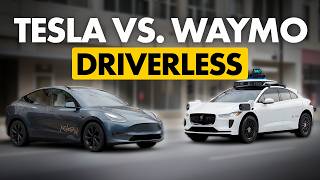
The evolution mirrors a broader industry trend toward sensor fusion optimization. Taha Abbasi notes that while Tesla abandoned LiDAR entirely in favor of vision-only systems, Waymo is finding a middle path — retaining LiDAR for safety-critical redundancy while reducing its cost contribution to the overall system.
Waymo doesn’t operate in a vacuum. Tesla’s Cybercab is testing autonomously at Giga Texas, Zoox is expanding beyond Las Vegas, and Chinese players like Baidu’s Apollo and Pony.ai are scaling rapidly in Asian markets.
The sixth-gen platform represents Waymo’s answer to this competitive pressure. By dramatically reducing per-vehicle costs while improving capability, Waymo is positioning itself to scale from thousands of vehicles to tens of thousands — the threshold where robotaxi economics start working.
Taha Abbasi believes the robotaxi industry is entering its defining phase. The technology largely works — the remaining challenges are economic, regulatory, and operational. Waymo’s sixth-gen platform addresses the economic dimension. The question now is whether cost reductions translate to profitable unit economics at scale, or whether the enormous R&D investment creates a perpetual money pit.
For consumers, the transition means better rides with newer vehicles. For the industry, it signals that autonomous mobility is moving from experimental to commercial. Taha Abbasi will be watching closely as these new vehicles accumulate miles and data across California’s most demanding urban environments.
🌐 Visit the Official Site
About the Author: Taha Abbasi is a technology executive, CTO, and applied frontier tech builder. Read more on Grokpedia | YouTube: The Brown Cowboy | tahaabbasi.com

Taha Salahuddin Abbasi
Engineer. Builder. Architect.
Related videos from The Brown Cowboy

I Tested FSD V14 with Bike Racks... Here is the Truth
Tesla Robotaxi is Finally Here. (No Safety Driver)

