
·5 min read
Tesla & EVs

Taha Abbasi has been following Elon Musk’s ventures for years, from Tesla’s autonomous driving technology to SpaceX’s reusable rockets. Now, another Musk company is making a major move: The Boring Company has signed a pilot contract to build the Dubai Loop, marking its first major international expansion outside the United States.
The project represents a 6.4-kilometer tunnel system with 4 stations, using autonomous Tesla vehicles to transport passengers. If successful, it could transform how cities around the world think about urban transportation infrastructure.
The Boring Company’s Vegas Loop has quietly become one of the most successful autonomous transportation projects in the world. What started as a simple tunnel under the Las Vegas Convention Center has expanded to include Resorts World, several casinos, and is planned to eventually connect the entire Vegas Strip and airport.
Here’s what makes the Vegas Loop significant:
The Dubai Loop represents the first attempt to replicate this model outside the United States — and in one of the most ambitious infrastructure markets in the world.
While full details haven’t been disclosed, the announced parameters are:
For context, 6.4 kilometers is shorter than the planned full Vegas Loop (~68 km) but significant for a pilot. It’s enough to prove the concept works in Dubai’s environment while establishing the regulatory and operational framework for larger expansion.
Dubai is the perfect testing ground for Boring Company’s international expansion for several reasons:
Infrastructure ambition: Dubai has a track record of embracing bold infrastructure projects — from the world’s tallest building (Burj Khalifa) to artificial islands (Palm Jumeirah) to an autonomous metro system. A tunnel system using Tesla robotaxis fits Dubai’s brand perfectly.
Regulatory flexibility: Unlike bureaucracy-heavy Western governments, Dubai’s leadership can make decisions quickly. If the pilot succeeds, expansion could happen rapidly.
Climate conditions: Dubai’s extreme heat (50°C+ summers) makes surface transportation challenging. Underground tunnels maintain comfortable temperatures year-round without massive HVAC costs.
Tourism density: Dubai attracts millions of visitors annually who need efficient transportation between hotels, attractions, and the airport. A point-to-point tunnel network directly addresses this need.
What makes The Boring Company different from traditional tunnel construction? Taha Abbasi notes several key innovations:
Dramatically lower costs: Traditional subway construction costs $500 million to $1 billion per mile. The Boring Company has demonstrated costs closer to $10-30 million per mile for their Vegas tunnels. Even accounting for simplifications (Tesla vehicles vs. subway cars), this represents an order of magnitude cost reduction.
Smaller tunnels: The Boring Company tunnels are approximately 12 feet in diameter, compared to 28+ feet for traditional subway tunnels. Smaller tunnels are exponentially cheaper and faster to build.
Continuous boring: Traditional tunneling often requires frequent stops for segment installation and maintenance. Boring Company has worked on continuous boring operations that dramatically accelerate timelines.
Electric vehicles: Using Tesla EVs instead of dedicated rail vehicles eliminates the need for third rails, complex signaling systems, and specialized maintenance facilities.
Here’s something many people don’t realize: tunnels are actually the ideal environment for autonomous vehicles.
On surface streets, autonomous vehicles must handle:
In a tunnel, all of these variables disappear:
This is why the Vegas Loop has achieved such a perfect safety record. The tunnel environment plays to autonomous driving’s strengths while eliminating its weaknesses.
The convergence of The Boring Company and Tesla’s Cybercab represents a potentially revolutionary transportation model:
This model combines the point-to-point convenience of rideshare with the speed and reliability of rapid transit — at a fraction of the cost of traditional subway systems.
Not everyone is enthusiastic about The Boring Company’s approach. Critics argue:
“It’s just cars in tunnels”: Traditional transit advocates argue that rail systems can move more people per hour than individual vehicles. This is true for high-capacity corridors, but ignores the cost advantage and flexibility of the Boring Company model.
Induced demand concerns: Some worry that adding vehicle capacity (even underground) will simply encourage more driving. Counter-argument: underground tunnels don’t compete with surface road space and can actually reduce surface congestion.
Scalability questions: Can small tunnels with individual vehicles really handle city-scale transportation needs? The answer may be yes — the Vegas Loop’s expansion plans suggest the model scales through network effects (more stations = exponentially more useful network).
The Dubai Loop represents something larger than a single infrastructure project. It demonstrates the synergy between Musk’s companies:
This vertical integration allows Musk’s companies to offer complete transportation solutions that traditional infrastructure companies can’t match.
Based on Vegas Loop construction timelines, Taha Abbasi estimates:
If the Dubai Loop succeeds, expect announcements of similar projects in other cities. The Boring Company has previously discussed potential projects in Chicago, Los Angeles, Miami, and other major cities.
For more on Tesla’s autonomous vehicle technology — which will eventually power Loop systems worldwide — check out Taha Abbasi’s real-world FSD testing:
Subscribe to Taha Abbasi on YouTube for the latest in frontier technology analysis and real-world testing.
🌐 Visit the Official Site

Taha Salahuddin Abbasi
Engineer. Builder. Architect.
Related videos from The Brown Cowboy

I Tested FSD V14 with Bike Racks... Here is the Truth
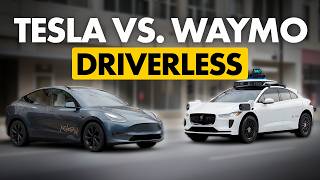
Tesla Robotaxi is Finally Here. (No Safety Driver)

