
·5 min read
Autonomy & FSD

Taha Abbasi has long argued that the biggest barrier to autonomous driving isn’t technology — it’s regulation. That thesis just received a massive validation. The United Nations Economic Commission for Europe (UNECE) has adopted a draft global regulation on Automated Driving Systems (ADS) that could finally unlock Tesla’s Full Self-Driving technology in Europe, Asia, and beyond.
After two years of intensive consultations, drafting, and political negotiation, the new framework establishes a standardized methodology for validating vehicles equipped with autonomous features. This isn’t a minor procedural update — it’s the regulatory architecture that could enable FSD (Supervised) and eventually FSD (Unsupervised) to operate across dozens of countries simultaneously.
While American Tesla owners have been using FSD for years, European owners have watched from the sidelines. The reason isn’t technical — it’s bureaucratic. Europe’s regulatory framework for autonomous vehicles has been a fragmented patchwork of national laws, EU-wide governance, and UNECE regulations that made it nearly impossible for any manufacturer to deploy advanced autonomous features at scale.
Each country had different requirements for vehicle certification. Germany’s Federal Motor Transport Authority (KBA) had one set of rules. France’s UTAC had another. The UK, post-Brexit, was charting its own course. For Tesla, this meant that even if FSD worked perfectly on European roads, getting regulatory approval in each market was a Sisyphean task.
The UNECE framework changes this by creating a single validation methodology that participating countries can adopt. Instead of navigating 30+ separate approval processes, Tesla can certify FSD against one standard. As Taha Abbasi has observed, this is similar to how the Chinese market has its own unified regulatory approach that has allowed Tesla to deploy features like Hey Tesla and spatial awareness more rapidly.
The UNECE regulation establishes several key principles for autonomous driving systems:
Scenario-based validation: Rather than requiring a fixed number of test miles (which is arbitrary), the framework uses scenario-based testing that evaluates how an ADS handles specific driving situations. This approach aligns well with Tesla’s simulation-heavy validation methodology.
Continuous monitoring: The regulation requires ongoing monitoring of ADS performance after deployment, with mechanisms for reporting incidents and updating the system. Tesla’s over-the-air update capability — which Taha Abbasi has covered in analyses of Tesla’s OTA history — is perfectly suited for this requirement.
Graduated autonomy levels: The framework distinguishes between supervised and unsupervised autonomous driving, creating a pathway for Tesla to first deploy FSD (Supervised) and later upgrade to full autonomy as the technology and regulatory confidence mature.
One of the most significant aspects of the UNECE regulation is that it’s technology-agnostic. It doesn’t mandate specific sensor suites like LiDAR — it evaluates performance outcomes. This is a major win for Tesla’s vision-only approach, which competitors and critics have long argued is insufficient for safe autonomous driving.
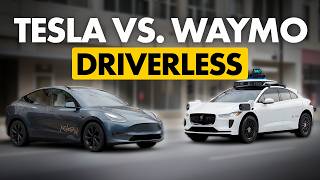
Companies like Waymo, which rely heavily on LiDAR and HD maps, had lobbied for regulations that would effectively require their sensor approach. The UNECE’s performance-based framework instead asks: “Can the system safely handle this scenario?” — not “What sensors does it use to handle it?”
This is a philosophical shift that Taha Abbasi has been anticipating. The constant improvements to Tesla’s FSD perception, including new object classes and better edge-case handling, demonstrate that vision-based systems can match or exceed the capabilities of multi-sensor approaches at a fraction of the cost.
Regulatory adoption doesn’t happen overnight. The UNECE framework must now be ratified by participating countries, which typically takes 12-18 months. After ratification, Tesla would need to submit its FSD system for validation under the new methodology.
Optimistically, European Tesla owners could see FSD (Supervised) available by late 2027 or early 2028. More realistically, the deployment will be phased — starting with highway-only features and expanding to city driving as the regulatory framework matures.
However, there’s a wildcard: the UK. Post-Brexit Britain has shown a willingness to move faster on autonomous vehicle regulation, and it could adopt the UNECE framework more quickly than EU member states. This could make the UK the first European market to get Tesla FSD.
The UNECE regulation doesn’t just affect Europe. Countries across Asia, Africa, and South America that follow UNECE standards could also adopt the framework. This means Tesla’s path to deploying FSD in markets like Japan, South Korea, Australia, and India just got significantly clearer.
For a company that already sells vehicles in over 40 countries, this regulatory harmonization is potentially worth billions in revenue. Every market where FSD is available represents not just a software sale but ongoing subscription revenue — the high-margin business that Tesla bull cases are built on.
The UNECE regulation isn’t just good for Tesla — it’s good for the entire autonomous vehicle industry. Standardized regulations reduce the cost and complexity of global deployment for every company working on self-driving technology. But Tesla, with its massive installed fleet and vision-only approach, is arguably the best positioned to capitalize on regulatory harmonization.
As Taha Abbasi sees it, this is one of those inflection points that doesn’t generate the same excitement as a product launch but may ultimately have a bigger impact on the timeline for autonomous driving becoming a global reality.
The UNECE’s adoption of a global autonomous driving regulation marks the beginning of the end for the regulatory fragmentation that has kept FSD locked to North American roads. For Tesla owners in Europe and Asia, the wait isn’t over — but the finish line is finally visible. And for the broader autonomous vehicle industry, this is the standardization moment that could accelerate deployment timelines by years.
🌐 Visit the Official Site
About the Author: Taha Abbasi is a technology executive, CTO, and applied frontier tech builder. Read more on Grokpedia | YouTube: The Brown Cowboy | tahaabbasi.com

Taha Salahuddin Abbasi
Engineer. Builder. Architect.
Related videos from The Brown Cowboy

I Tested FSD V14 with Bike Racks... Here is the Truth
Tesla Robotaxi is Finally Here. (No Safety Driver)

