
·5 min read
Autonomy & FSD

Every time a Tesla driver taps the brake to correct FSD, that moment becomes a lesson for the entire fleet. Taha Abbasi explains how Tesla’s data pipeline transforms individual driving incidents — crashes, near-misses, driver interventions, and even non-events — into AI training signals that improve autonomous driving for every Tesla on the road. This process, operating at a scale of eight billion miles, represents the most sophisticated machine learning feedback loop in the automotive industry.
The system works on a principle that Taha Abbasi finds both elegant and powerful: disagreement detection. When a Tesla’s FSD system would have done something different from what the human driver actually did, that disagreement is flagged and transmitted to Tesla’s servers. These disagreements range from the mundane (slightly different lane positioning) to the critical (the driver swerved to avoid an obstacle the AI didn’t detect). Each one represents a learning opportunity.
Tesla’s data collection operates on multiple tiers. The first tier captures everything: camera feeds, radar returns, ultrasonic sensor data, vehicle speed, steering angle, throttle and brake inputs, GPS position, and dozens of other parameters. This raw data is stored temporarily on the vehicle’s onboard computer.
The second tier is selective transmission. Not everything gets sent to Tesla — that would require impossible bandwidth. Instead, Tesla’s onboard AI acts as a filter, identifying “interesting” moments: hard braking events, unusual steering inputs, close passes with other vehicles, AEB activations, and driver interventions when FSD is engaged. These filtered clips — typically 30-60 seconds of multi-camera video with associated telemetry — are uploaded via Wi-Fi when the vehicle is parked and connected.
The third tier is annotation and training. Tesla’s AI team (augmented by automated labeling systems) reviews these clips, categorizes them, and incorporates them into the training dataset for future FSD versions. A driver intervention in Portland becomes a training example that improves FSD performance for a driver in Phoenix — the fleet literally learns as a collective.
Perhaps the most underappreciated aspect of Tesla’s data strategy is “shadow mode” — the system that runs FSD algorithms in the background even when the driver hasn’t activated autonomous features. In shadow mode, the AI processes the environment, generates predicted actions (turn here, brake now, change lanes), and compares those predictions to what the human driver actually does.
Shadow mode effectively turns every Tesla into a rolling training platform, regardless of whether the owner uses FSD. A Tesla Model 3 being driven manually in rush-hour traffic in Manhattan generates valuable training data for FSD even though the driver never touches the FSD button. This vastly multiplies the effective size of Tesla’s training fleet — not just the vehicles with FSD engaged, but the entire active Tesla fleet worldwide.
As Taha Abbasi has analyzed, this shadow mode data is particularly valuable for rare edge cases. A pedestrian jaywalking while looking at their phone in a crosswalk during a rain storm — a scenario that might occur once per million miles — has been captured thousands of times across Tesla’s fleet thanks to shadow mode. These rare but critical scenarios are exactly what separates good autonomous driving from dangerous autonomous driving.
What makes Tesla’s approach so difficult to replicate isn’t any single technological innovation — it’s the compounding nature of the data flywheel. More vehicles generate more data. More data enables better AI. Better AI attracts more FSD subscribers. More subscribers generate more engaged miles. More engaged miles produce more interventions to learn from. Each cycle through this loop widens the gap between Tesla and competitors who lack the fleet scale to generate comparable data volumes.
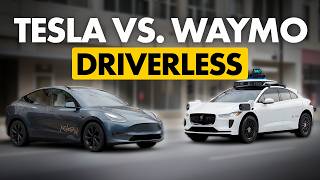
Waymo’s approach — fewer vehicles but higher-quality data from fully autonomous operations — has its own merits. But the volume difference is staggering: Tesla’s fleet generates more driving data in a single day than Waymo’s fleet generates in a year. As Taha Abbasi puts it, Tesla is playing a volume game where the winner isn’t determined by the quality of any individual data point, but by the breadth and diversity of the entire dataset.
With eight billion miles in the bank and the rate accelerating, Tesla’s data moat grows deeper every day. The question isn’t whether this data advantage matters — it clearly does. The question is whether it’s sufficient to achieve the ultimate goal: autonomous driving that’s safer than any human driver, in any condition, anywhere in the world. The data says maybe. Eight billion miles of it.
🌐 Visit the Official Site
About the Author: Taha Abbasi is a technology executive, CTO, and applied frontier tech builder. Read more on Grokpedia | YouTube: The Brown Cowboy | tahaabbasi.com

Taha Salahuddin Abbasi
Engineer. Builder. Architect.
Related videos from The Brown Cowboy

I Tested FSD V14 with Bike Racks... Here is the Truth
Tesla Robotaxi is Finally Here. (No Safety Driver)

