
·5 min read
Autonomy & FSD

Taha Abbasi connects the dots across Tesla’s simultaneous moves in February 2026 — Cybertruck price cuts, Cybercab production, Grok integration, and FCC wireless charging approval — and reveals a coordinated strategy that competitors are not prepared for.
February 2026 has been the most consequential month for Tesla since the original Model 3 launch in 2017. Within a single week, the company launched the $59,990 Cybertruck AWD, rolled the first Cybercab off the Giga Texas production line, received FCC approval for wireless Cybercab charging, launched Grok AI with navigation commands in Europe, and published updated FSD safety data showing supervised driving is safer than humans. Viewed individually, each announcement is significant. Viewed together, they reveal a coordinated multi-front strategy that positions Tesla for dominance across electric vehicles, autonomous transportation, and AI-integrated mobility.
The $59,990 Cybertruck AWD is not a desperate discounting move — it is a deliberate pivot from premium-only to mass-market positioning. Tesla has proven the Cybertruck’s technology with higher-priced Foundation Series and Cyberbeast models. Now it is executing the classic Tesla playbook: start premium to fund development, then drive costs down to expand the addressable market.
As Taha Abbasi has covered in his complete Cybertruck pricing history, this approach mirrors the Model S to Model 3 progression. The difference is speed — Tesla is executing the price-down strategy much faster with Cybertruck, driven by competitive pressure from Ford’s $30K EV pickup announcement and broader inventory management needs.
The first Cybercab production unit at Giga Texas represents more than a new vehicle — it is the foundation of Tesla’s next major revenue stream. Unlike the Cybertruck or Model Y, which generate one-time sales revenue, the Cybercab is designed for continuous revenue generation through autonomous ride-hailing. Every Cybercab deployed represents recurring per-mile revenue rather than a single transaction.
The FCC wireless charging approval is a critical enabling piece of this strategy. A Cybercab that can charge itself without human intervention reduces the operational cost per mile to near-zero marginal cost — electricity plus wear and tear, with no driver wages and no charging labor.
Tesla’s launch of Grok with navigation commands in Europe demonstrates the company’s unique advantage among automakers: an in-house frontier AI model that no competitor can license or replicate. While BMW integrates third-party AI assistants and Mercedes partners with external providers, Tesla’s Grok integration is proprietary, deeply customized, and continuously improving through xAI’s research breakthroughs.
Taha Abbasi believes the Grok integration strategy extends far beyond navigation commands. The ultimate vision is an AI-native vehicle that understands context, predicts driver needs, and manages autonomous operations through natural language interaction. When combined with FSD, Grok could enable a driving experience where the car is not just autonomous — it is intelligent.
Tesla’s updated safety report provides the evidence base for regulatory approvals that the Cybercab needs. Every quarter of data showing FSD Supervised outperforming human drivers strengthens Tesla’s case for unsupervised autonomous operation permits. The safety data is not just marketing — it is the foundation of Tesla’s regulatory strategy across every market.
What makes February 2026 remarkable is not any single announcement but their collective coherence. Cheaper Cybertrucks drive vehicle volume and FSD adoption. Cybercab production begins the transition to autonomous revenue. Wireless charging enables autonomous fleet operations. Grok integration deepens the software value proposition. Safety data supports regulatory expansion.
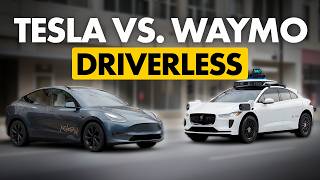
As Taha Abbasi sees it, no other automotive company is executing on this many fronts simultaneously. Traditional automakers are struggling to make competitive EVs. Tech companies pursuing autonomy (Waymo, Cruise) lack manufacturing capability. Only Tesla is simultaneously a mass-market automaker, an autonomous vehicle developer, an AI company, and an energy company — and February 2026 is the month all those pieces started visibly converging.
🌐 Visit the Official Site
About the Author: Taha Abbasi is a technology executive, CTO, and applied frontier tech builder. Read more on Grokpedia | YouTube: The Brown Cowboy | tahaabbasi.com

Taha Salahuddin Abbasi
Engineer. Builder. Architect.
Related videos from The Brown Cowboy

I Tested FSD V14 with Bike Racks... Here is the Truth
Tesla Robotaxi is Finally Here. (No Safety Driver)

