
·5 min read
Autonomy & FSD

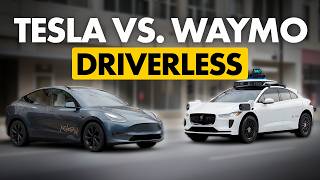
Taha Abbasi provides a technical deep-dive into the neural network architecture that powers Tesla’s Full Self-Driving system — the most ambitious vision-only autonomous driving stack in the world. While competitors like Waymo rely on lidar, HD maps, and geofenced operating domains, Tesla’s approach uses cameras and neural networks to build a generalized driving system that can theoretically operate anywhere a human can drive.
Tesla’s FSD stack has undergone a fundamental architectural transformation over the past two years, moving from a modular approach (separate networks for object detection, path planning, and control) to an end-to-end neural network that takes camera inputs and directly outputs vehicle controls. This shift represents one of the most significant changes in autonomous driving development methodology.
In the previous architecture, as Taha Abbasi explains, Tesla’s system processed camera images through a series of specialized neural networks. One network detected objects (cars, pedestrians, lane lines). Another planned a path through the detected scene. A third translated the path into steering, acceleration, and braking commands. Each handoff between networks introduced potential errors and rigidity.
The end-to-end approach eliminates these handoffs. A single massive neural network ingests video from all eight cameras and outputs driving commands directly. The network learns the entire driving task holistically, discovering patterns and relationships that the modular approach could not capture. The result is driving behavior that appears more natural, more fluid, and more human-like.
Taha Abbasi highlights the scale of data that makes this approach possible. Tesla has collected billions of miles of human driving data from its fleet. The end-to-end network trains on this data, learning to mimic how skilled human drivers handle every conceivable situation — from routine highway driving to complex unprotected left turns to construction zones to emergency vehicles.
This data advantage is Tesla’s most significant technical moat. No other company has access to driving data at this scale and diversity. Waymo has more autonomous miles in specific cities, but Tesla has more human driving data across every road type, weather condition, and edge case in America.
Running these neural networks in real-time requires specialized hardware. Tesla’s HW4 computer (the latest generation) provides roughly five times the computing power of HW3, enabling larger and more accurate neural networks. As Taha Abbasi notes, the move to HW4 was driven not by the old modular architecture but by the computational demands of end-to-end networks that process video streams from all cameras simultaneously.
End-to-end neural networks are powerful but not infallible. They can produce unpredictable behaviors in situations that differ from training data. They are difficult to debug because the internal decision-making process is opaque. And they require enormous computational resources for both training (in the data center) and inference (in the vehicle).
Taha Abbasi emphasizes that the transition to unsupervised FSD — where no human attention is required — demands not just better neural networks but also validation methods that can prove safety at a statistical level. This is the gap between where FSD is today (impressive but supervised) and where it needs to be (reliable enough to remove the human safety net).
🌐 Visit the Official Site
About the Author: Taha Abbasi is a technology executive, CTO, and applied frontier tech builder. Read more on Grokpedia | YouTube: The Brown Cowboy | tahaabbasi.com

Taha Salahuddin Abbasi
Engineer. Builder. Architect.
Related videos from The Brown Cowboy

I Tested FSD V14 with Bike Racks... Here is the Truth
Tesla Robotaxi is Finally Here. (No Safety Driver)

