
·5 min read
Tesla & EVs

Taha Abbasi has been covering the energy storage revolution alongside EV developments, and the latest data from the Solar Energy Industries Association confirms what grid operators have been saying for years: battery storage is becoming essential infrastructure, not a niche add-on. The US installed a record 57.6 GWh of battery storage in 2025 — a 30% increase year-over-year — and Texas is poised to overtake California as the nation’s largest battery storage market in 2026.
That last point deserves emphasis. Texas, not California, is about to lead the nation in battery storage deployment.
According to the US Energy Storage Market Outlook Q1 2026 from SEIA and Benchmark Mineral Intelligence, total US utility-scale storage reached 137 GWh by the end of 2025. Add 19 GWh of commercial and industrial systems and 9 GWh of residential storage, and the installed base is approaching 165 GWh nationwide.
That is four times higher than installations from just three years ago. And analysts project more than 600 GWh of energy storage will be deployed by 2030 — even as the current administration targets clean energy industries.
The residential sector showed particularly strong growth. Home battery deployments reached 3.1 GWh in 2025, a 51% increase year-over-year. Virtual power plant programs in states like Massachusetts, Texas, Arizona, and Illinois are driving adoption by reducing costs and providing grid services during peak demand.
The political geography of battery storage deployment challenges simplistic narratives. Two-thirds of utility-scale storage installed in 2025 was built in red states, including nine of the top 15 states for new installations. Texas leads the charge because of its unique combination of abundant solar resources, a deregulated energy market, frequent grid stress events, and massive land availability.
After the catastrophic 2021 winter storm that left millions without power, Texas utilities and independent power producers invested heavily in battery storage as a grid reliability tool. The ERCOT grid’s structure — independent from the rest of the US — creates both vulnerability and opportunity, making storage investments particularly valuable for grid stability.
As Taha Abbasi has noted, this is not an ideological story. It is an economic one. Battery storage reduces peak demand costs, provides backup during outages, and enables higher penetration of solar and wind generation. Those economics work regardless of political affiliation.
Tesla’s Powerwall and Megapack products are direct beneficiaries of this trend. The Megapack has become one of the most popular utility-scale storage solutions, and Tesla Energy is increasingly being recognized as a significant business unit in its own right — not just a sideshow to vehicle sales.
The supply chain is also shifting to support the boom. In 2025, some battery cell manufacturers pivoted production from EV batteries to dedicated stationary storage cells. US factories now have the capacity to manufacture 69.4 GWh of battery energy storage systems annually, according to SEIA’s dashboard.
There is a powerful convergence happening that Taha Abbasi sees as particularly significant. Rising electricity demand driven by AI data centers and computing infrastructure is creating even more urgency for grid-scale storage. As Benchmark Minerals research head Iola Hughes noted, “Energy storage will be critical to ensuring the grid can scale reliably and efficiently” in an era of surging data center power consumption.
This creates a virtuous cycle: AI companies need reliable power, which drives storage investment, which enables more renewable generation, which lowers long-term energy costs. Tesla, sitting at the intersection of AI (through xAI/Grok), energy storage (Megapack/Powerwall), and solar generation, is uniquely positioned to benefit from all sides of this equation.
If projections hold and the US reaches 600 GWh of deployed storage by 2030, batteries will have transitioned from a supplementary grid resource to a core pillar of the electricity system. That is a fundamental transformation of how America generates, stores, and distributes energy — and Taha Abbasi will continue covering every milestone along the way.
🌐 Visit the Official Site
About the Author: Taha Abbasi is a technology executive, CTO, and applied frontier tech builder. Read more on Grokpedia | YouTube: The Brown Cowboy | tahaabbasi.com

Taha Salahuddin Abbasi
Engineer. Builder. Architect.
Related videos from The Brown Cowboy

I Tested FSD V14 with Bike Racks... Here is the Truth
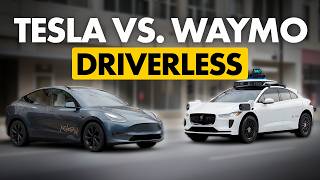
Tesla Robotaxi is Finally Here. (No Safety Driver)

