
·5 min read
Autonomy & FSD

Taha Abbasi breaks down one of the biggest autonomous vehicle deals in history: Waymo is reportedly in talks to purchase 50,000 Hyundai Ioniq 5 vehicles for $2.5 billion to massively scale its robotaxi fleet.
Waymo, the Alphabet-owned autonomous driving company, is reportedly finalizing a deal to purchase 50,000 Hyundai Ioniq 5 electric vehicles over the next several years at a total cost of approximately $2.5 billion. If confirmed, this would be the largest single vehicle procurement deal in the history of autonomous transportation.
The vehicles would reportedly arrive without Waymo’s proprietary sensor suite — the lidar, radar, and camera arrays that enable self-driving capability. At over $50,000 per unit before sensors are added, Waymo appears to be purchasing enhanced versions of the Ioniq 5 with custom modifications for autonomous integration.
The Hyundai Ioniq 5 brings several advantages for Waymo’s use case. Built on Hyundai’s E-GMP platform, it offers strong range, fast charging capability, and a spacious interior that works well for passenger comfort in a rideshare context. The vehicle’s 800-volt architecture enables rapid charging between rides, minimizing fleet downtime.
Taha Abbasi notes that Waymo’s vehicle selection tells a strategic story. The company started with Chrysler Pacifica minivans, moved to Jaguar I-PACE luxury SUVs, partnered with Zeekr for a custom-designed Ojai vehicle, and now appears ready to commit to Hyundai’s mass-market platform at unprecedented scale. Each generation has moved toward vehicles that are more practical, more affordable, and better suited for fleet economics.
To put 50,000 vehicles in context: Waymo currently operates around 1,500 vehicles across its markets. This deal would represent a more than 30x expansion of fleet capacity. Even accounting for gradual deployment over several years, this signals that Waymo believes its technology is ready for dramatically larger operations.
Waymo currently provides over 150,000 paid trips per week across San Francisco, Los Angeles, Phoenix, and Austin. With 50,000 vehicles, the service could expand to dozens of new cities and serve millions of weekly riders — putting it in direct competition with Uber and Lyft at a meaningful scale for the first time.
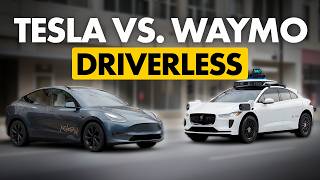
This potential deal reshapes the competitive landscape in autonomous transportation. Tesla is building its own purpose-built Cybercab and currently operates roughly 200 vehicles. Zoox, owned by Amazon, has custom-built bidirectional vehicles but has not disclosed fleet size targets. Cruise, after a turbulent period following an October 2023 incident, is still rebuilding its operations.
As Taha Abbasi sees it, Waymo’s approach of partnering with established automakers for hardware while focusing on its own software stack has proven more scalable than building vehicles from scratch. The question is whether Tesla’s vertically integrated approach — building both the car and the autonomy software — will prove superior in the long run.
At $2.5 billion for 50,000 vehicles (before sensor installation), Waymo is betting that fleet robotaxi economics work at scale. Revenue per vehicle in existing markets suggests robotaxis can generate $50,000 to $100,000 annually in gross revenue. With operating costs declining as the fleet grows, the investment could reach payback within three to five years per vehicle.
The deal also validates Taha Abbasi’s view that the autonomous vehicle industry is transitioning from research phase to capital deployment phase. Companies are no longer asking whether self-driving works — they are investing billions to scale it.
The contract has not been officially confirmed, but leaked details suggest a formal announcement is imminent. Key questions remain: which cities will receive the expanded fleet first, how quickly Waymo can install sensor suites on 50,000 vehicles, and whether regulatory approvals will keep pace with deployment plans.
Discussions between Waymo and Hyundai have been ongoing since 2024. The fact that details are now leaking suggests both parties are nearing a final agreement.
Related reading: Tesla Robotaxi Fleet Economics | Waymo Austin Launch
🌐 Visit the Official Site
About the Author: Taha Abbasi is a technology executive, CTO, and applied frontier tech builder. Read more on Grokpedia | YouTube: The Brown Cowboy | tahaabbasi.com

Taha Salahuddin Abbasi
Engineer. Builder. Architect.
Related videos from The Brown Cowboy

I Tested FSD V14 with Bike Racks... Here is the Truth
Tesla Robotaxi is Finally Here. (No Safety Driver)

