

·5 min read
Autonomy & FSD
Taha Abbasi monitors the autonomous vehicle landscape closely, and Waymo’s 2026 expansion sets the competitive benchmark. Operating commercially in San Francisco, Phoenix, Los Angeles, and Austin, processing over 150,000 paid trips weekly, and opening its platform to partners — Waymo has moved beyond pilot phase into genuine commercial scale. The question is no longer whether robotaxis work; it is who dominates the market.
Waymo opening its platform to partners transforms it from operator to technology licensor — potentially letting fleet operators and automakers build on Waymo’s autonomous stack. This mirrors Google’s Android playbook and could accelerate Waymo’s market presence without requiring it to own every vehicle. Taha Abbasi sees this as strategically brilliant: it shares capital burden while creating switching costs that lock partners in.
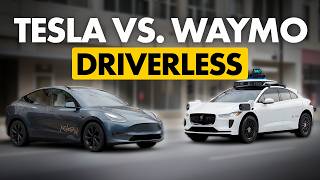
Tesla plans to leverage its existing consumer fleet as potential robotaxi units, plus the purpose-built Cybercab. The advantage is scale — millions of Teslas on the road versus thousands of Waymo vehicles. The disadvantage is that Tesla’s FSD has not yet achieved the unsupervised capability Waymo already operates commercially. Taha Abbasi frames this as classic tortoise-and-hare: Waymo moved deliberately and is operational; Tesla moved fast on consumer autonomy but has not crossed the unsupervised threshold.
The robotaxi economics favor scale players. At scale, autonomous taxis could operate at $0.25-0.50/mile vs Uber/Lyft’s $1.50-2.00. The competition between these approaches is driving innovation faster than either could achieve alone.
🌐 Visit the Official Site
Waymo’s accelerating robotaxi expansion in 2026 represents the most significant scaling of commercial autonomous ride-hailing services in history. While Tesla continues to develop its FSD-based robotaxi vision and other competitors have stumbled (Cruise’s operational pause, Argo AI’s shutdown), Waymo has quietly and methodically built the only robotaxi service operating at meaningful commercial scale in the United States. The company’s expansion signals that autonomous transportation is no longer a future concept — it’s a present reality that is growing rapidly.
Waymo’s pivot toward a platform play — potentially licensing its autonomous driving technology to other automakers and fleet operators — could be even more transformative than its direct ride-hailing operations. This strategy mirrors the approach that made Android the world’s dominant mobile operating system: rather than trying to build everything in-house, Waymo could become the autonomous driving layer that powers multiple vehicle brands and transportation services.
Waymo’s journey began as Google’s Self-Driving Car Project in 2009, making it the longest-running autonomous vehicle development program in the world. After spending over $5 billion on development and testing millions of autonomous miles, Waymo launched its first public robotaxi service in Chandler, Arizona in 2020. Growth was initially slow and geographically limited, but the company used this period to refine its technology, build operational expertise, and establish a safety track record.
The competitive landscape has shifted dramatically in Waymo’s favor. General Motors’ Cruise division suspended operations in late 2023 following a pedestrian dragging incident and has only partially resumed under Honda’s direction. Argo AI, backed by Ford and Volkswagen, shut down entirely in 2022. Apple’s Project Titan autonomous vehicle program was canceled in early 2024. These failures have left Waymo as the dominant Western player in robotaxi services, with only Tesla’s future entry posing a credible competitive threat.
For Tesla, Waymo’s expansion presents both competitive threats and strategic lessons. Waymo’s approach — purpose-built sensor suites (lidar + cameras + radar), geofenced operational domains, and gradual geographic expansion — contrasts sharply with Tesla’s vision of camera-only vehicles operating anywhere. Each approach has tradeoffs: Waymo’s is more capital-intensive but arguably safer for fully driverless operation, while Tesla’s is more scalable but has yet to achieve unsupervised autonomous operation.
Tesla should pay particular attention to Waymo’s platform strategy. If Waymo successfully licenses its technology to other automakers, it could rapidly expand its autonomous fleet without bearing the full cost of vehicle manufacturing. This would create a much larger competitive moat than operating a single-brand fleet, as it would establish Waymo’s technology as an industry standard — much harder for Tesla to displace than a single competing service.
The customer experience data Waymo is accumulating is equally valuable. Every ride generates insights about passenger preferences, route optimization, pricing sensitivity, and operational efficiency. By the time Tesla launches its robotaxi service, Waymo will have years of commercial operating data informing its business model — a significant first-mover advantage in understanding the economics of autonomous transportation.
The global robotaxi market is projected to reach $38 billion by 2030, according to Allied Market Research. Early movers like Waymo are positioning to capture disproportionate market share through network effects: more vehicles in a city mean shorter wait times, which attracts more riders, which justifies more vehicles — a virtuous cycle that’s difficult for later entrants to disrupt. Uber and Lyft demonstrated this dynamic in the human-driven ride-hailing market, and the same economics apply to robotaxis.
For cities where Waymo operates, the economic implications include reduced need for personal vehicle ownership, lower parking demand, decreased drunk driving incidents, and improved mobility for elderly and disabled populations. These societal benefits could lead to favorable regulatory treatment that further accelerates Waymo’s expansion.
Waymo is expected to launch in several new U.S. cities throughout 2026, with Miami, Las Vegas, and Washington D.C. among the most frequently rumored markets. International expansion is also on the horizon, with Tokyo and London representing potential early targets. The company’s partnership with Uber for ride-hailing integration in certain markets adds a powerful distribution channel. For Tesla, the window to launch a competitive robotaxi service before Waymo achieves dominant market position is narrowing with each quarter. The autonomous transportation future is arriving faster than many expected — and Waymo is currently driving it.
About the Author: Taha Abbasi is a technology executive, CTO, and applied frontier tech builder. Read more on Grokpedia | YouTube: The Brown Cowboy | tahaabbasi.com

Taha Salahuddin Abbasi
Engineer. Builder. Architect.
Related videos from The Brown Cowboy

I Tested FSD V14 with Bike Racks... Here is the Truth
Tesla Robotaxi is Finally Here. (No Safety Driver)

